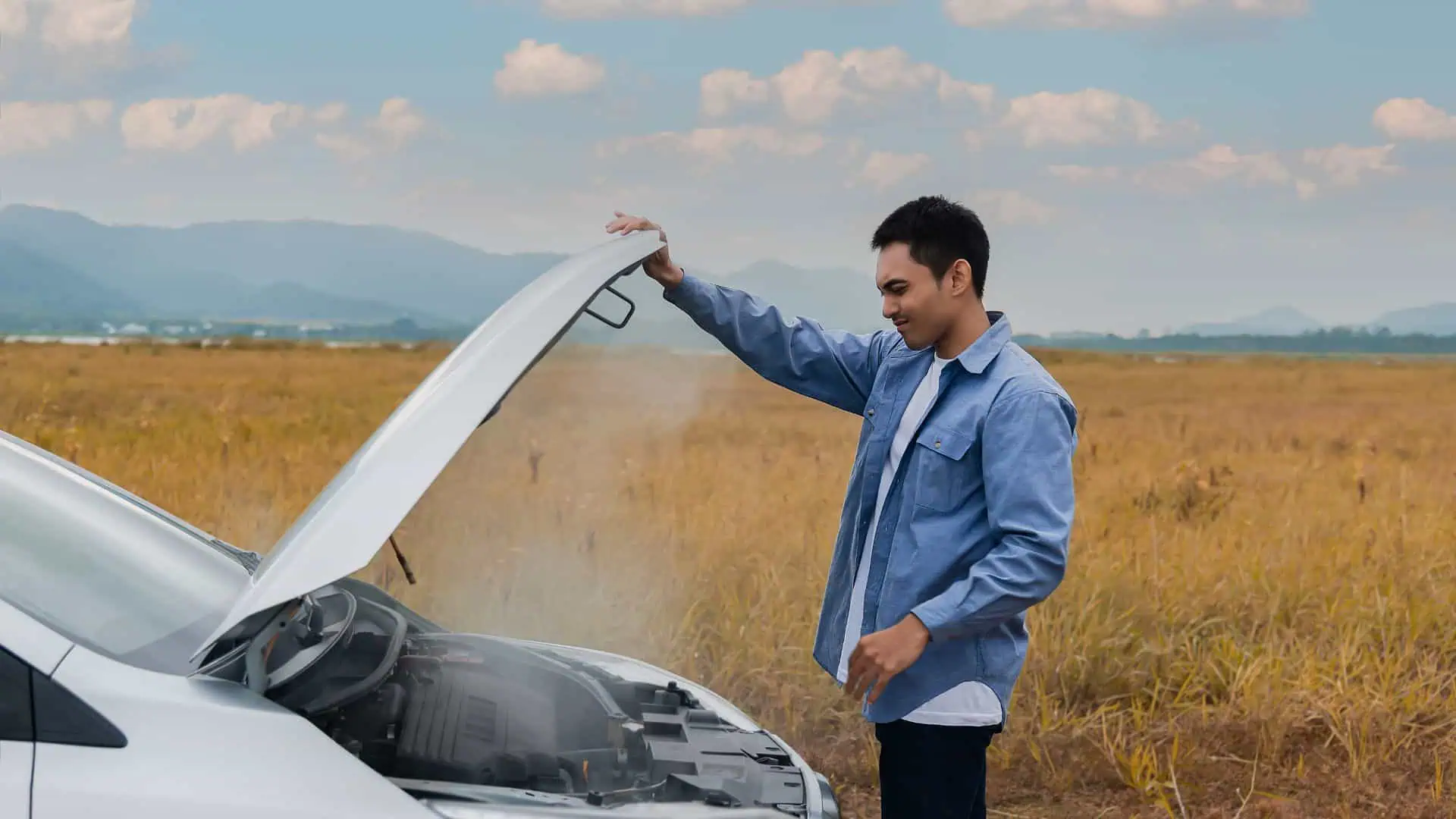

No one wants to end up on the side of the road with car trouble. While flat tires, fender benders and empty gas tanks may be the first problems that come to mind, an overheating engine can be just as stressful. If your temperature gauge starts climbing or you see steam coming from under the hood, it’s important to act quickly and safely. Start with these four steps:
- Pull over to a safe location as soon as you can.
- Turn off the engine.
- Call for roadside assistance or professional help.
- Wait for the engine to cool, and do not touch the engine.
These steps may seem simple, but figuring out why an engine is overheating is usually best left to a professional. Your vehicle may need to be towed and inspected, and diagnostic equipment may be needed to find the problem. Even if you’re tempted to check the coolant or antifreeze reservoir near the radiator, use caution and avoid touching anything under the hood. Engine parts and fluids can be extremely hot and may cause serious burns. Most importantly, do not remove the radiator cap. The cooling system is under pressure, and opening the cap can release hot coolant or steam.
Common myths about overheating engines
- Myth: Hot weather and running the AC on high will make your car overheat.
Modern vehicles are designed to handle warm weather and air conditioning use. If your car overheats, there may be a problem with the cooling system or another component. Hot weather can contribute to the issue, but an underlying problem can cause overheating in mild or cool temperatures too. - Myth: Filling the antifreeze reservoir with water will keep the engine running properly.
Water may help in an emergency, but it is not a long-term replacement for coolant. Coolant contains additives that help protect your engine, while relying on water alone can lead to damage over time. - Myth: Coolant is only needed in the summer.
Coolant helps regulate your engine’s temperature in every season. In colder months, it helps prevent freezing. Throughout the year, it also helps protect against rust and corrosion. - Myth: Once the engine cools down, you can safely get back on the road.
Letting the engine cool is important, but it does not fix the problem. The cause of the overheating needs to be identified and repaired before the vehicle can operate normally again. Common causes may include low coolant, a faulty thermostat, blocked airflow, a leaking water pump or another issue a professional should diagnose.
Hopefully, you never have to deal with an overheating engine. But if it happens, staying calm and taking the right steps can help keep you safe. Pull over, turn off the engine and let a professional help get you and your vehicle safely back on the road.