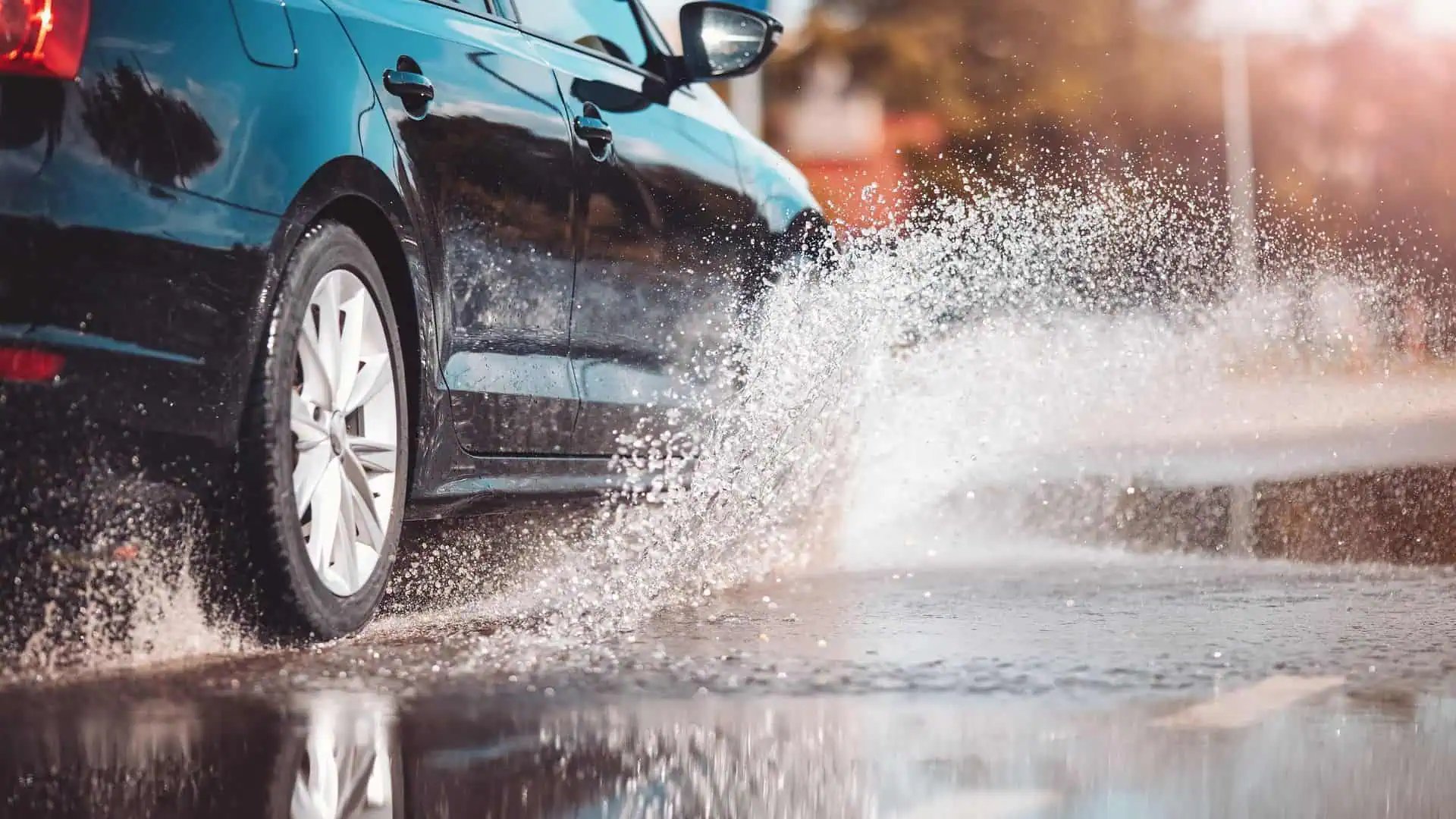

Rainy weather can turn an ordinary drive into a more challenging one. Wet roads, lower visibility and longer stopping distances all make it important to slow down and stay alert. Before you head out, take a few minutes to check your vehicle and think through how you’ll adjust your driving. A little preparation can go a long way toward keeping you, your passengers and others on the road safer.
Check Your Vehicle Before You Go
Basic vehicle maintenance is always important, but it matters even more when rain is in the forecast. Before driving in wet weather, make sure these essentials are ready:
- Make sure your windshield wipers are in good shape and can clear rain from the windshield effectively.
- Check your tire tread. Tires with worn tread have less grip on wet pavement and can make hydroplaning more likely.
- Confirm your headlights, taillights and brake lights are working so other drivers can see you clearly.
- Test your window defroster so you can quickly clear fogged windows if humidity builds up inside your vehicle.
Adjust How You Drive
- Slow down. Your vehicle may not respond as quickly on wet, slick roads, and driving too fast can increase your chances of hydroplaning.
- Turn on your windshield wipers and adjust the speed based on how hard it is raining.
- Use your headlights so you can see better and others can see you. Avoid using hazard lights while driving unless required, since they can confuse other drivers and may not be allowed in some states.
- Leave extra room between your vehicle and the one in front of you. More space gives you more time to react and stop safely.
- Turn off cruise control. On wet roads, it can be harder to regain control if your tires lose traction while cruise control is engaged.
- Brake gently and earlier than usual. Ease off the accelerator first, then apply the brakes smoothly when you need to slow down.
- Avoid driving through standing water. It can be hard to tell how deep the water is, and hidden hazards or deep water can damage your vehicle or cause you to lose control.
- If your vehicle starts to hydroplane, take your foot off the accelerator, avoid sudden braking and steer gently in the direction you want to go.
Driving in the rain doesn’t have to be stressful, but it does call for extra care. By checking your vehicle, slowing down and giving yourself more time to react, you can help make rainy-day driving safer for yourself and everyone around you.