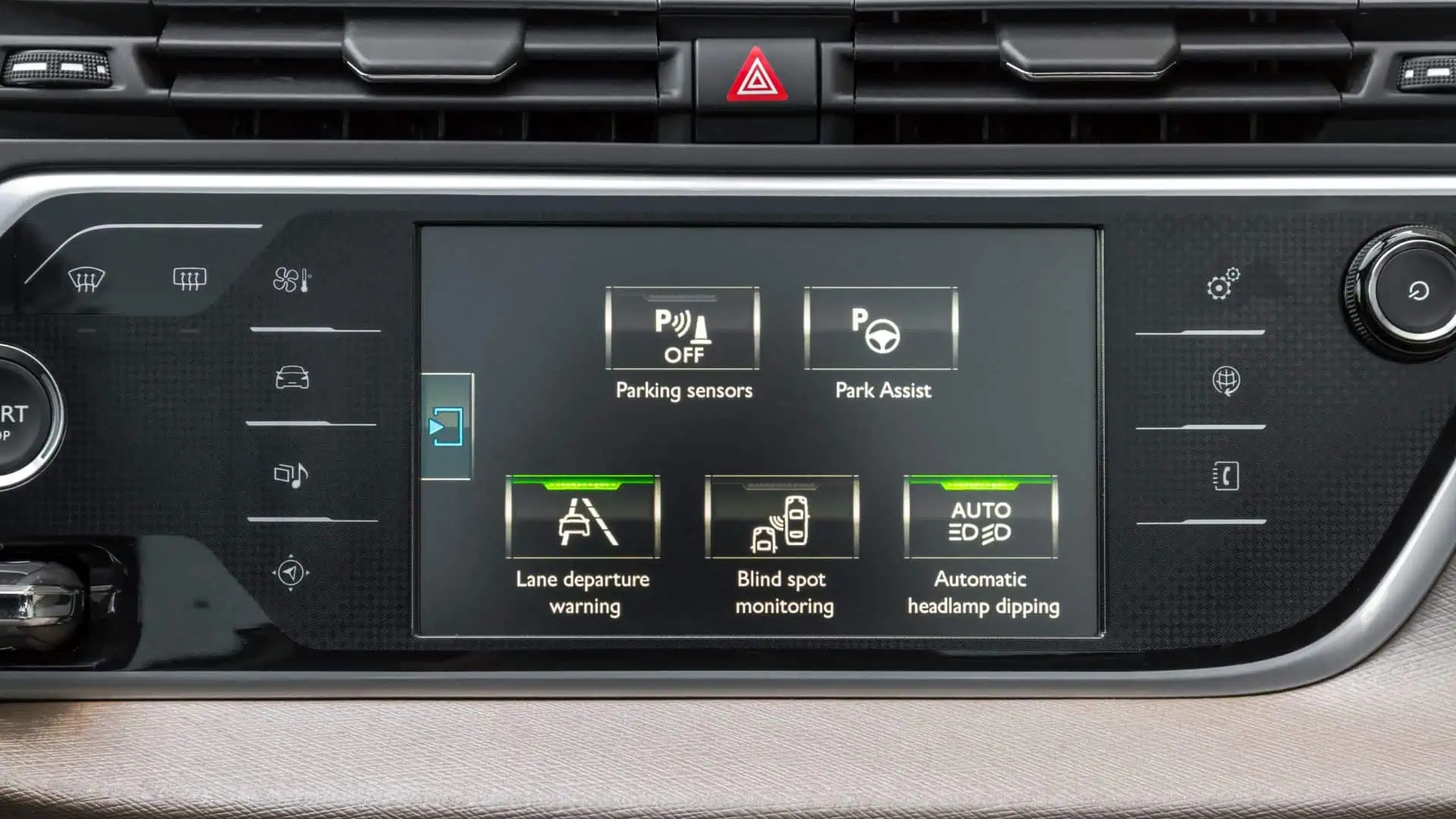

Today’s vehicles are smarter than ever. Many new and used cars now include advanced safety features built into areas like bumpers, mirrors and windshields. These systems are designed to help drivers avoid accidents, and according to the Insurance Institute for Highway Safety (IIHS), many of them are making a real difference. Here are a few ways these technologies can help reduce crashes:
- Automatic Emergency Braking: 50% fewer front-to-rear crashes and 56% fewer front-to-rear crashes with injuries.
- Automatic Emergency Braking with Pedestrian Detection: 27% fewer pedestrian crashes and 30% fewer pedestrian injury crashes.
- Lane Departure Warning: 11% fewer single-vehicle, sideswipe and head-on crashes, and 21% fewer injury crashes of the same types.
- Blind Spot Detection: 14% fewer lane-change crashes and 23% fewer lane-change crashes with injuries.
- Rear Automatic Braking: 78% fewer backing crashes when combined with rearview cameras and parking sensors.
- Rearview Cameras: 17% fewer backing crashes.
- Rear Cross-Traffic Alert: 22% fewer backing crashes.
With numbers like these, it is easy to see why many drivers value these features. They can add convenience, confidence and another layer of protection on the road. But there is another side to consider: when a vehicle with advanced technology is damaged, repairs can be much more expensive than they used to be.
In some cases, what looks like a minor accident—or even hail damage—can lead to a vehicle being declared a total loss. This can happen when the cost to repair the vehicle reaches a certain percentage of its value, and that percentage varies by state. Because many safety sensors are located in areas that are easily damaged, such as bumpers, fenders, side mirrors and windshields, repair bills can add up quickly.
It’s More Than Just Parts
When a damaged part contains sensors or cameras, the repair usually involves more than simply replacing that part. Those systems often need to be recalibrated so they work correctly after the repair. That extra labor, equipment and expertise can increase the total cost.
Proper calibration matters because drivers may rely on these features to alert them or help them respond in certain situations. If the technology is not repaired correctly, it may not work as expected—or it may not work at all. Not every repair shop has the tools, training or equipment needed to service advanced vehicle technology, which can make repairs more complicated.
How This Can Affect Insurance Rates
Advanced safety features offer real benefits, especially when they help prevent accidents and injuries. However, they can also make vehicles more expensive to repair after a covered event, such as a crash or hail damage. As repair costs increase, the overall cost of insurance claims can increase too. Over time, that can contribute to higher auto insurance rates for drivers.
The bottom line: today’s vehicle safety technology can help reduce crashes, but it can also make repairs more complex and costly when damage does happen. That is why a seemingly small accident may have a bigger financial impact than many drivers expect—and why it is always important to stay alert, drive carefully and understand how your vehicle’s features work.