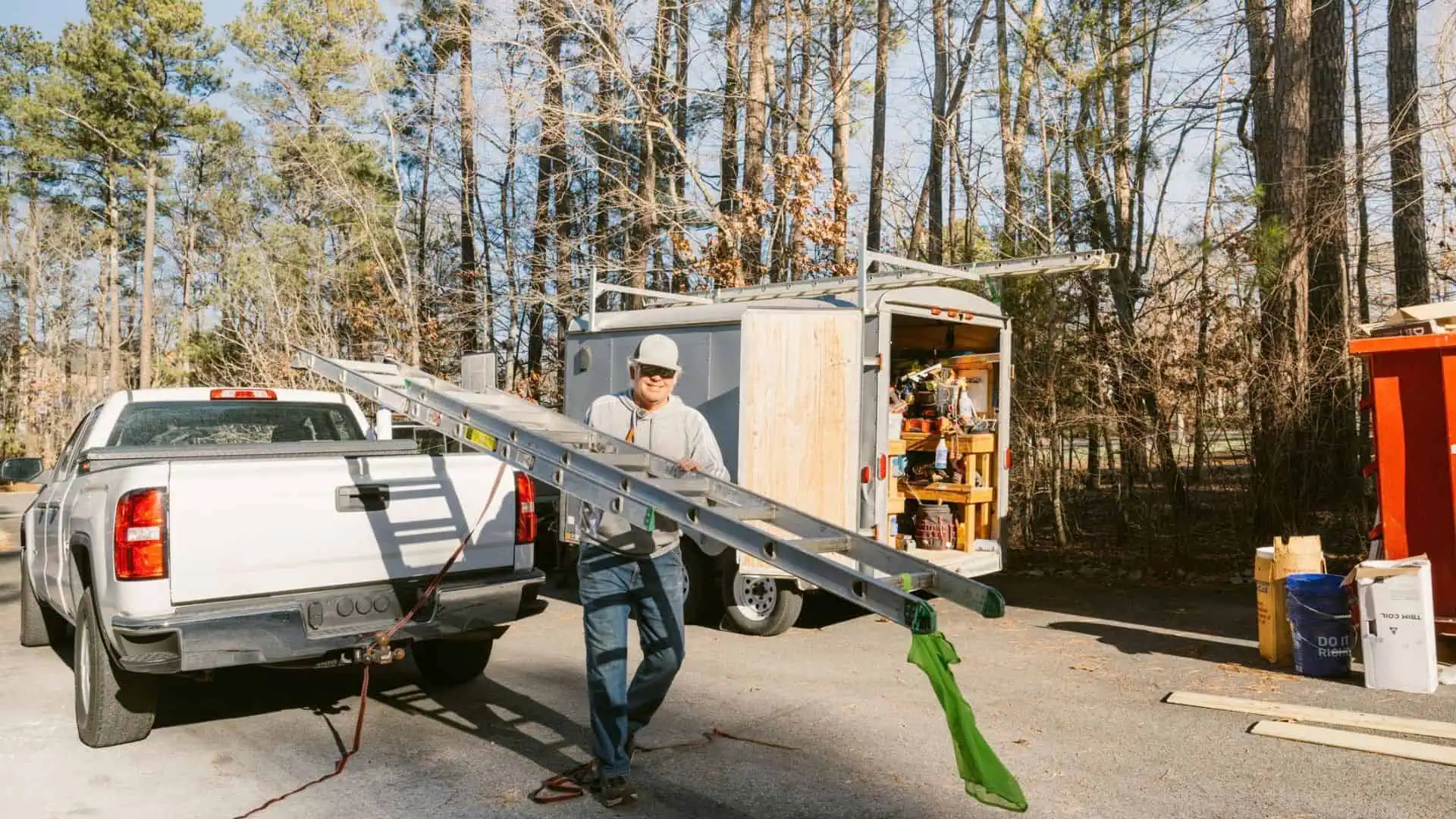

For many artisan contractors, ladders are just as important as the tools in the truck. Whether you’re an electrician, painter, roofer, drywaller or general contractor, getting ladders from one job to the next safely should be part of your everyday routine. A ladder that isn’t secured properly can put your crew, other drivers and your business at risk.
Why Ladder Transportation Matters
A ladder that shifts, slides or falls from a vehicle can cause serious damage or injury. Even if it doesn’t lead to an accident, improper transport can bend or wear out a ladder faster, which may mean replacement costs and lost time on the job. Taking a few extra minutes to secure it can help protect your equipment and show others that your business takes safety seriously.
Common Ladder Transportation Mistakes
Problems often happen when ladders are:
- Not secured with the right straps or tie-downs
- Extended beyond the vehicle without the proper warning flag or other required marking.
- Loaded unevenly on roof racks
- Transported next to loose materials that can shift during the drive
- Carried on damaged racks or mounting systems
These shortcuts might save a minute or two, but they can create much bigger problems on the road.
Best Practices for Transporting Ladders
A few simple habits can make ladder transportation safer:
- Use the Right Rack
A sturdy ladder rack made for your vehicle can help you transport ladders more securely. Check it regularly for loose bolts, rust, cracks or other signs of wear. - Secure Ladders at Multiple Points
Use heavy-duty straps, clamps or locking systems made for transporting ladders. Securing the ladder in more than one place helps keep it from shifting while you drive. - Check It Before Every Trip
Before you leave the shop or job site, take a quick walk around the vehicle. Make sure the straps are tight, the ladder is centered and nothing can move during the trip. - Be Aware of Height and Length
Know your vehicle’s total height once the ladder is loaded. It’s easy to forget about the added height when entering parking garages, drive-thrus or other low-clearance areas. - Protect the Ladder
Straps that are too tight or ladders dragged across a rack can cause unnecessary wear. Careful loading and unloading can help your equipment last longer. You can also wrap them with properly-secured moving blankets for an extra layer of protection.
Safe Driving with Ladder Loads
A ladder load can change the way your vehicle handles. Strong crosswinds, sudden stops and higher speeds can put extra pressure on racks and tie-downs.
When you’re carrying ladders:
- Leave extra space between you and the vehicle ahead
- Be aware of weather conditions and slow down when it’s windy
- Avoid sharp turns and sudden lane changes
- Stop and check the load occasionally on longer trips
Make Safety Part of the Routine
Transporting ladders safely doesn’t have to involve expensive equipment or complicated steps. A few consistent habits and regular inspections can lower the risk and help keep your business moving.
Properly securing a ladder can help protect more than the equipment itself. It can also help protect your employees, your vehicles, your reputation and everyone else on the road.